
Last updated September 10, 2026
Level 1 sweep and inspection to the NFPA 211 annual standard - flue, crown, cap, and flashing checked and photographed
Chimney sweep logs do not sweep chimneys. They loosen some creosote - which then falls where a brush and vacuum still have to collect it.
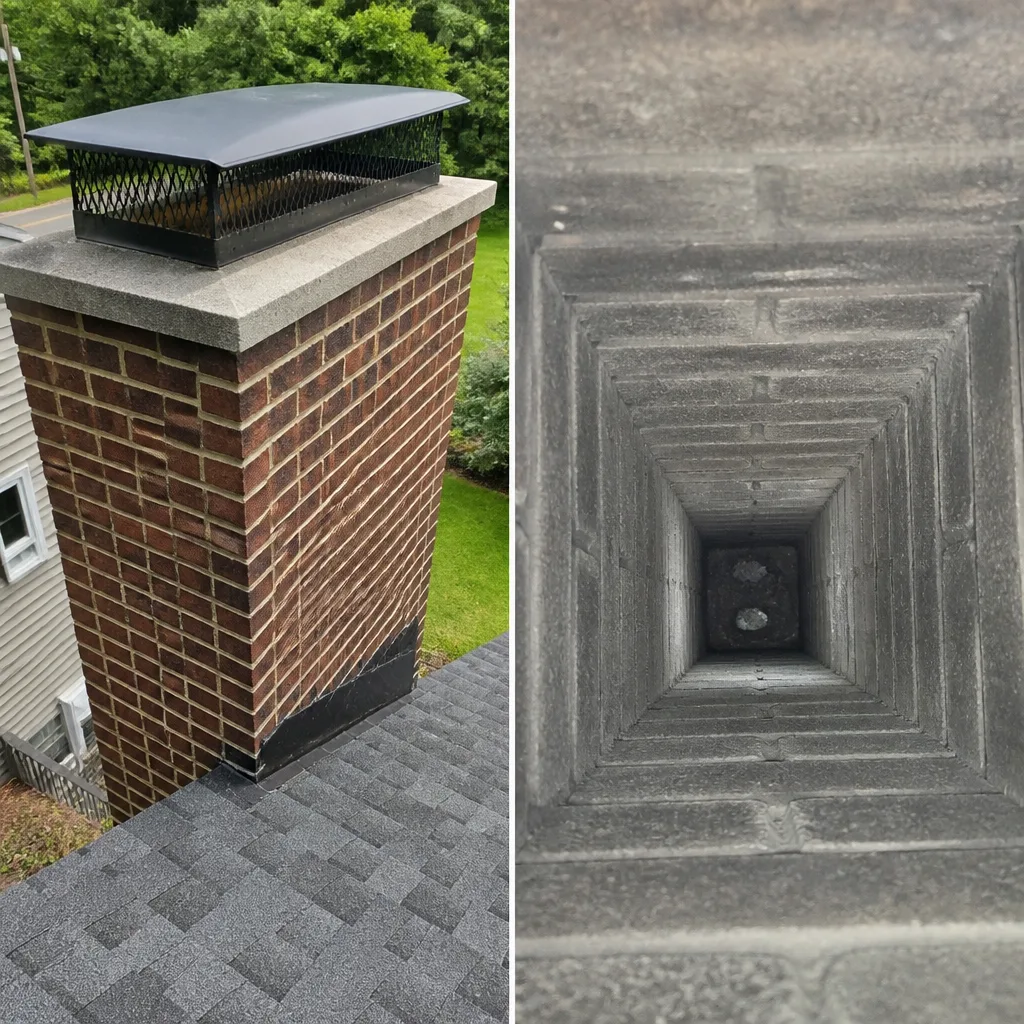
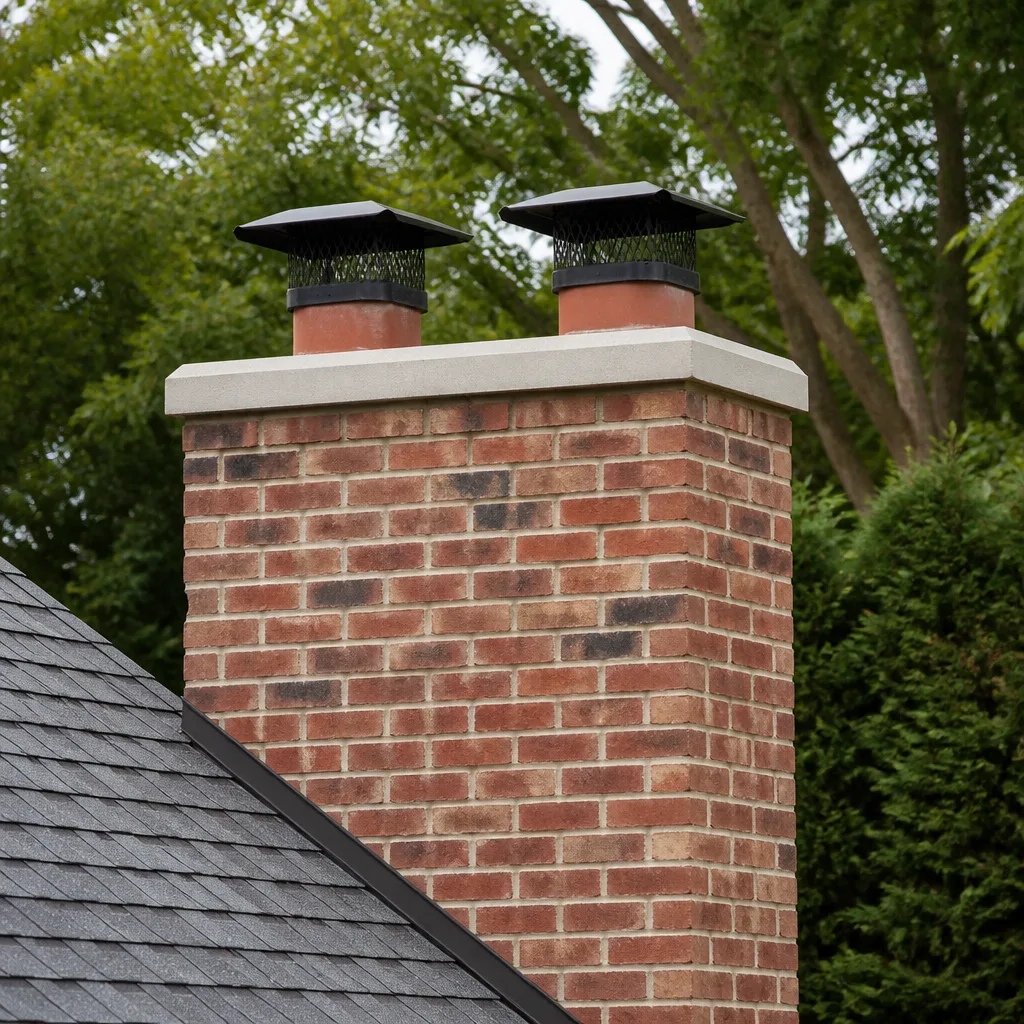
Flue relining
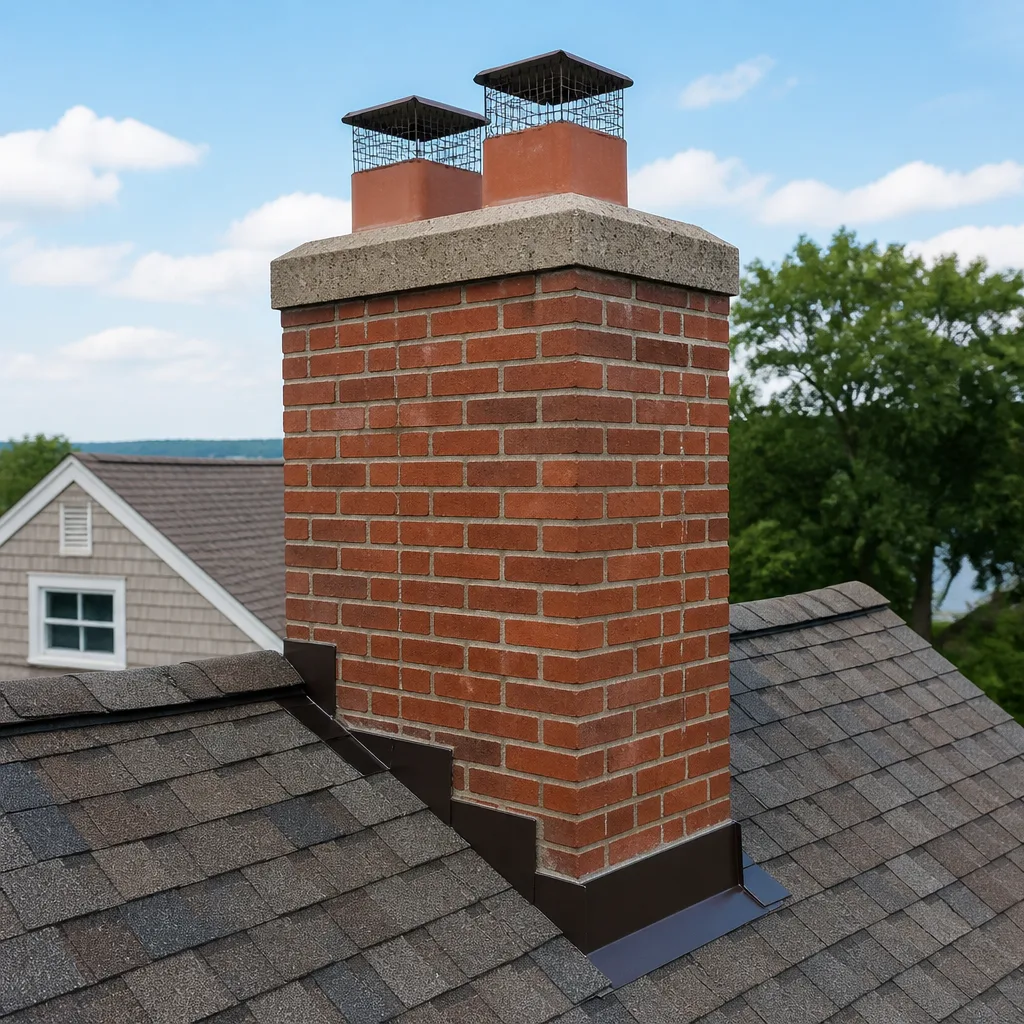
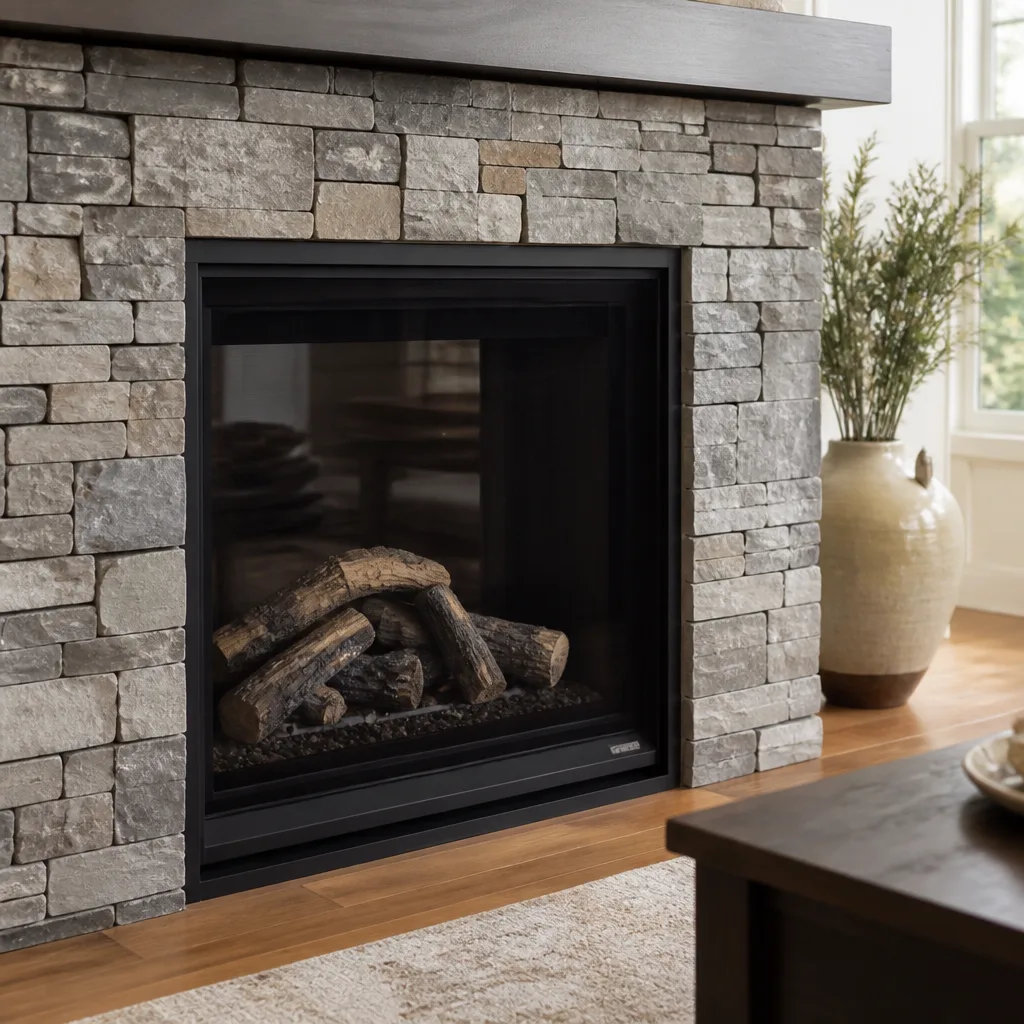
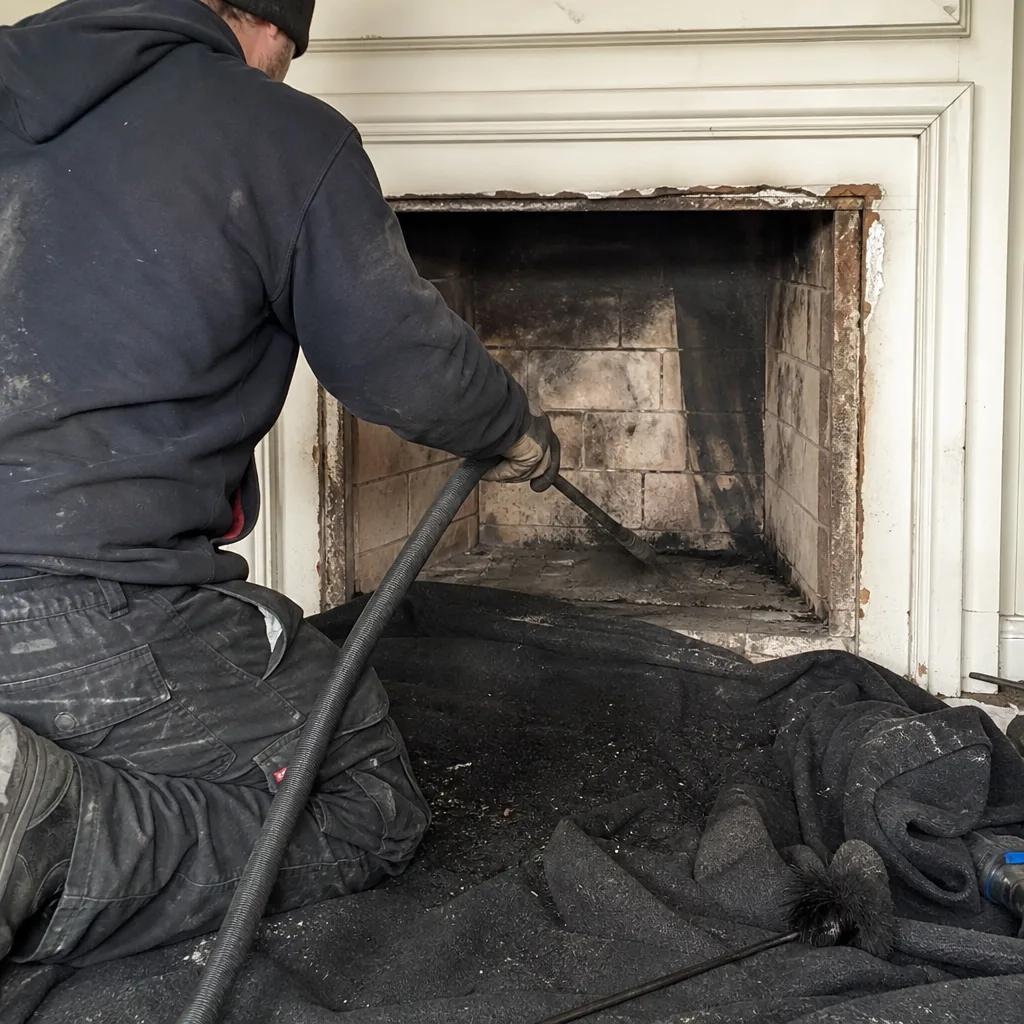 Before
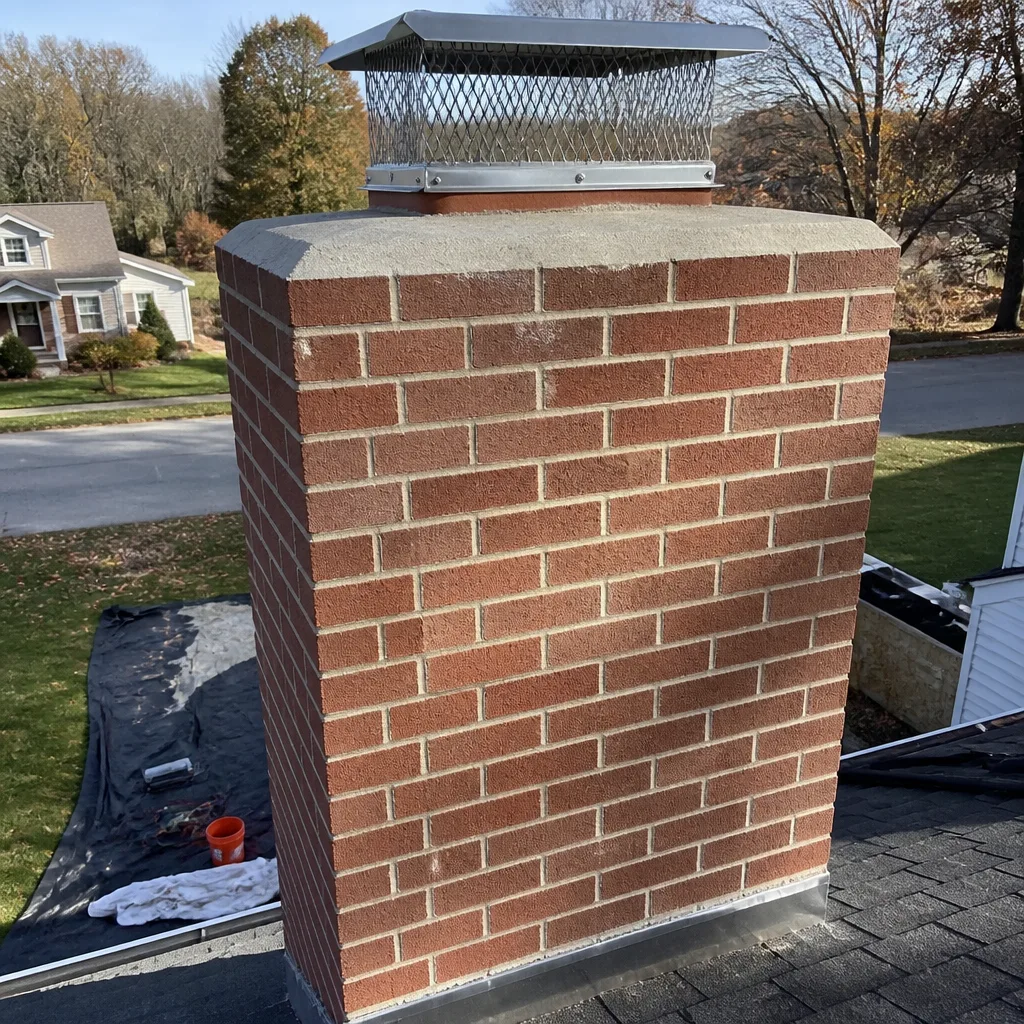 After
After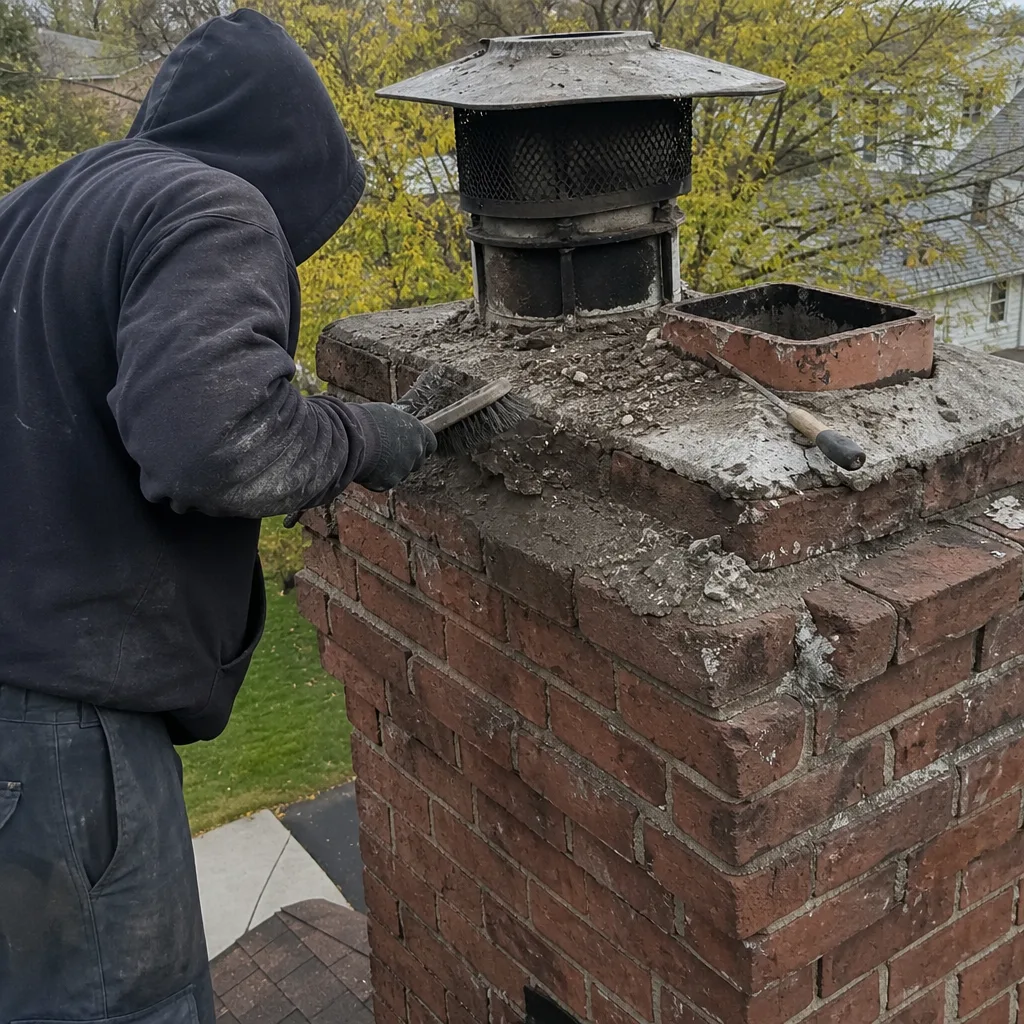 Before
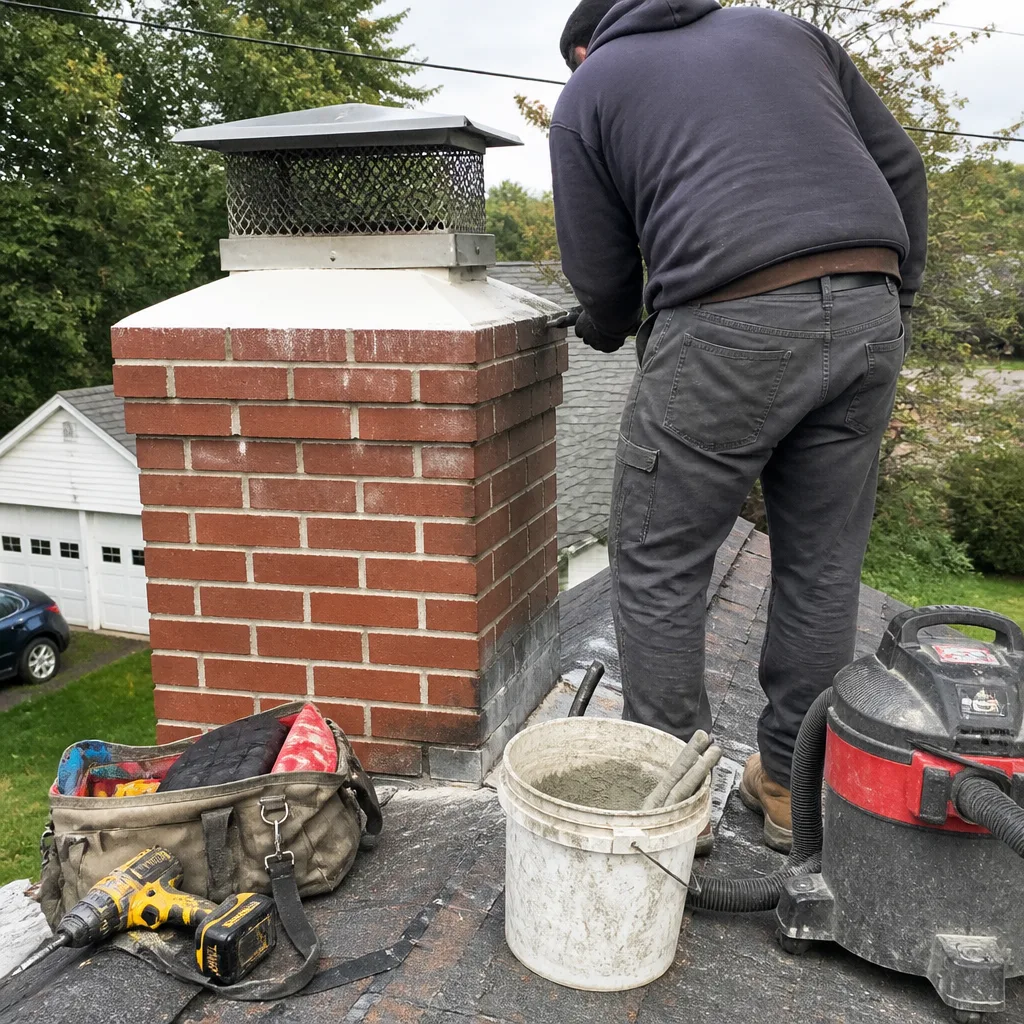 After
AfterThe Complete Guide to Chimney Cleaning in Pottstown
The National Fire Protection Association says chimneys, fireplaces, and vents cause over 25,000 house fires a year - and the majority involve chimneys that were “cleaned” but never properly inspected. Here in Pottstown, where much of the housing stock was built before 1970 with clay tile flue liners, that distinction matters more than most homeowners realize. This guide will show you what a complete chimney cleaning actually involves, why sweeping without inspection and documentation doesn’t count, and how to tell the difference between a real service call and a man with a brush. For DIY vs Professional Chimney Cleaning: The Pottstown Homeowner’s Decision Guide and more resources, see our blog.
Quick Answer
A complete chimney cleaning in Pottstown involves three distinct jobs: physical debris removal (sweeping), a systematic NFPA 211 inspection, and written documentation with photos. Most Pottstown homes with wood-burning fireplaces or stoves need this service annually, with costs typically ranging from $189 to $349 depending on the inspection level and creosote buildup severity. If you’re planning to hire help, read How to Hire a Chimney Cleaning Contractor in Pottstown: A Step-by-Step Guide first.
Table of Contents
- What a Complete Chimney Cleaning Actually Includes
- Why Pottstown’s Older Housing Stock Changes Everything
- Creosote Stages: What You’re Actually Dealing With
- Level 1 vs. Level 2 Inspection: Which One Do You Need?
- How to Read a Sweep’s Post-Job Report
- What Chimney Cleaning Costs in Pottstown
- Common Mistakes to Avoid
- When to Call a Professional
- Frequently Asked Questions
What a Complete Chimney Cleaning Actually Includes
Most homeowners in Pottstown think they’ve had their chimney cleaned when they’ve only had it swept. There’s a difference. A complete chimney cleaning, done the way the National Fire Protection Association intends, combines three distinct jobs into one visit. Skip any one of them, and you haven’t received the service your insurance company and your family’s safety require.
1. Physical Debris Removal (Sweeping)
This is the part everyone pictures: brushes, rods, and soot coming down. A proper sweep removes creosote deposits, soot, animal nests, and any obstructions from the flue liner, smoke chamber, and firebox. In Pottstown, where many chimneys sit unused through humid summers, we regularly find leaves, twigs, and even masonry fragments that have worked loose from aging crowns. The sweep uses professional-grade brushes sized to your flue diameter, not one-size-fits-all tools that miss the corners where creosote concentrates.
For standard fireplaces with moderate use, this phase takes 45 minutes to an hour. For heating appliances like wood stoves or inserts with connector pipes, the disassembly and reassembly add time but also reveal problems hidden in the assembly.
2. Systematic Inspection
After the flue is clear, the technician inspects every accessible component. This isn’t a glance up the flue with a flashlight. A proper inspection follows NFPA 211 protocol, checking the liner for cracks or gaps, the crown for deterioration, the flashing for water intrusion points, the damper for proper operation, and the structural integrity of the firebox and smoke chamber.
In our experience across Pottstown neighborhoods from North End to South Pottstown, the inspection phase reveals the real reason you called - even when the homeowner thought they just needed a routine sweep. We’ve found cracked liners in homes on Hanover Street, deteriorated smoke chamber parging in Victorian-era properties near High Street, and water-damaged flues in homes below the ridge line where wind-driven rain hits hardest.
3. Written Documentation With Photos
This is where most “sweeps” fail the completeness test. You should receive a written report that documents what was found, what was done, and what condition your chimney is in now. At minimum, this report should include:
- The date of service and technician name
- The type of inspection performed (Level 1 or Level 2)
- Findings for each major component (liner, crown, cap, damper, firebox, smoke chamber, exterior masonry)
- Photos of any defects or areas of concern
- Clear recommendations with priority levels
- Documentation suitable for insurance or real estate purposes
Without this documentation, you have no proof the work was done, no baseline for comparing future inspections, and no defense if your insurance company questions a later claim. A verbal “looks fine” from someone standing in your driveway is not documentation.
At Hearthstone Chimney Co. home, our Level-2 camera inspections end with photos you can see and a plain-English verdict - documented like an engineer, explained like a craftsman. That’s the standard a complete cleaning demands.
Why Pottstown’s Older Housing Stock Changes Everything
Pottstown’s character is rooted in its architecture. The borough and surrounding townships contain thousands of homes built between 1880 and 1965, many with original masonry fireplaces and clay tile flue liners that have seen decades of heating seasons. This isn’t a cosmetic distinction. It fundamentally changes what a chimney cleaning must address.
The Clay Tile Liner Problem
Clay tile flue liners, standard in pre-1970 construction, were never designed to withstand the thermal cycling of modern heating appliances. Each firing and cooling season causes slight expansion and contraction. Over forty or fifty years in a Pottstown winter, that cycling creates hairline cracks, shifted tiles, and mortar joint deterioration that a basic sweep won’t reveal.
We’ve inspected chimneys in the North End where the liner looked intact from the firebox but showed multiple cracks in the middle third - the hottest zone - visible only with a camera. A brush-and-vacuum sweep would have left those cracks undiscovered, and the next heating season would have sent combustion gases into the chimney wall, potentially reaching living spaces.
Unlined Chimneys in Pre-War Construction
Some of Pottstown’s oldest homes, particularly in the historic district and along Charlotte Street, were built with no liner at all - just brick and mortar exposed to flue gases. These chimneys require specialized evaluation before any cleaning, because the masonry itself may be compromised. Cleaning an unlined chimney with significant mortar loss can actually accelerate deterioration by removing the loose material that’s partially protecting sounder brick beneath.
The Freeze-Thaw Factor
Pottstown sits at roughly 200 feet elevation with a climate that delivers 20 to 30 freeze-thaw cycles each winter. Water that enters through cracked crowns or deteriorated flashing expands when it freezes, opening cracks wider. By spring, a small crown crack has become a structural channel. Our spring inspection season in Pottstown consistently shows more crown and cap damage than our fall appointments, because the winter has done its work.
This means a complete chimney cleaning in Pottstown isn’t just about fire safety. It’s about water damage prevention. The inspection must evaluate how well the chimney’s exterior defenses are holding up, because a flue that’s technically clean will still fail if the crown above it collapses.
Neighborhood-Specific Patterns
In our 42 years serving this area, we’ve noticed patterns tied to Pottstown’s development history. Homes in the Pottsgrove area, many built in the 1950s and 1960s, often have factory-built metal chimneys with chase covers that rust through predictably after 25 years. Properties in the original borough, with their taller masonry stacks, face more exposure to wind and driving rain from the northwest. Newer construction in West Pottsgrove typically has modern stainless steel liners but sometimes suffers from improper sizing for the appliances connected.
A generic sweep with no local knowledge misses these patterns. A complete cleaning accounts for them.
Creosote Stages: What You’re Actually Dealing With
Not all creosote is the same. The NFPA recognizes three distinct stages, and each requires different tools, different techniques, and different conversations with your sweep. Understanding what stage you’re at helps you evaluate whether the price you’re quoted matches the work required.
Stage 1: Soot and Fine Ash
Stage 1 creosote is a light, powdery deposit that brushes off readily with standard poly or wire brushes. It’s what you get with proper firewood (seasoned hardwood, burned hot), adequate air supply, and regular maintenance. A chimney with only Stage 1 buildup cleans in the standard time frame with standard tools.
If your Pottstown home has a gas fireplace or you burn only dry oak or maple with good draft, you may see mostly Stage 1. This is the ideal state. It’s also, unfortunately, the state that tempts homeowners to skip annual service - which is how Stage 2 develops unnoticed.
Stage 2: Crunchy, Flakey Deposits
Stage 2 creosote has begun to condense into harder, more adherent layers. It looks like black corn flakes or tarry scales clinging to the flue wall. It requires more aggressive brushing, often with motorized tools or chains, and significantly more time. The flue may need multiple passes, and the technician must verify that all deposits have been removed, not just loosened.
Stage 2 is common in Pottstown homes where homeowners burn softwood, use damp or unseasoned wood, or restrict air flow to extend burn times. It’s also typical in chimneys that have gone two or three years between cleanings. At this stage, the cleaning conversation should include questions about burning habits, because without changes, Stage 3 is coming.
Stage 3: Glazed or Hardened Creosote
Stage 3 creosote is a glossy, hardened, tar-like coating that has been baked onto the flue surface through repeated overheating. It cannot be removed with brushes. It requires chemical treatment to soften, followed by mechanical removal with specialized equipment. In severe cases, it may be more practical to reline the flue than to attempt full removal.
Stage 3 creosote is a genuine fire hazard. It ignites at lower temperatures than Stage 1 or 2, and once ignited, burns with sufficient intensity to crack clay tile liners and damage surrounding structure. We’ve seen Stage 3 buildup in Pottstown homes where homeowners have used their fireplace as a primary heat source for multiple winters without service, or where inserts were installed without proper liner connections.
When a sweep finds Stage 3, the conversation changes from “routine cleaning” to “remediation planning.” The homeowner needs to understand why the condition developed, what it will take to correct, and what prevention looks like going forward. Any sweep who finds Stage 3 and simply brushes what they can reach, leaving the glazed layer, has not performed a complete cleaning.
The Tool Difference
Here’s how to tell whether your sweep is equipped for what they find: Stage 1 requires quality brushes and rods. Stage 2 requires motorized cleaning systems or rotary chains. Stage 3 requires chemical agents like ACS (Anti-Creo-Soot) or Poultice Creosote Remover, applied over days or weeks before mechanical removal, or the industrial-grade tools from manufacturers like Copperfield and Famco that we keep in our Pottstown service vehicles.
A man with a brush and a vacuum can’t handle Stage 3. A complete cleaning service can.
Level 1 vs. Level 2 Inspection: Which One Do You Need?
The NFPA 211 standard defines three levels of chimney inspection. For most Pottstown homeowners, only Level 1 and Level 2 are relevant. Knowing which one applies to your situation prevents both under-service and overselling.
Level 1 Inspection: The Annual Standard
A Level 1 inspection is the baseline for chimneys that have not changed and are continuing in service under the same conditions. The technician examines readily accessible portions of the chimney exterior and interior, verifies basic structural soundness and flue connection, and confirms clear passage.
You need a Level 1 inspection if:
- Your appliance and chimney system have not changed since your last inspection
- You’re maintaining your established burning habits
- You had a complete cleaning with documentation within the past year
- No events (chimney fire, earthquake, major windstorm) have affected the structure
For many Pottstown homeowners with traditional fireplaces used occasionally through winter, Level 1 is appropriate for routine annual service. The inspection takes 30 to 45 minutes and is typically included in the base cleaning price.
Level 2 Inspection: When Something Has Changed
A Level 2 inspection adds internal camera examination of the flue liner and accessible portions of the system. It requires specialized video equipment and produces the documented record that a complete cleaning demands.
You need a Level 2 inspection if:
- You’re buying or selling a home in Pottstown (required by most real estate transactions)
- You’re changing your appliance type (wood to gas, fireplace to insert)
- You’ve had a chimney fire, even a small one
- You’ve experienced an earthquake, lightning strike, or major weather event
- Your chimney has not been inspected in over two years
- You’ve noticed performance changes (smoke backup, odor, reduced draft)
The camera inspection reveals what no flashlight can: cracked tiles above the smoke chamber, liner joint separation, mortar deterioration in the middle and upper flue, and creosote buildup patterns that indicate drafting problems. In Pottstown’s older housing stock, we recommend Level 2 for any first-time customer whose chimney history is unknown, and for any home over fifty years old regardless of apparent condition.
Level 3 Inspection: Rare and Destructive
Level 3 involves removing building materials to access concealed portions of the chimney. It’s only indicated when a Level 1 or 2 inspection suggests a hidden hazard that cannot be evaluated otherwise. This is not part of routine cleaning and should only be performed when specifically warranted.
What Pottstown Homeowners Should Expect
A complete cleaning with Level 2 inspection in Pottstown typically takes 90 minutes to two hours. You should expect the technician to show you camera footage in real time, explain findings in plain language, and provide a written report with photos within 24 hours. If you’re quoted a 30-minute “sweep and go” for $99, you’re not getting a Level 2 inspection, and you’re not getting a complete cleaning.
Chimney Cleaning & Sweep in Pottstown from Hearthstone Chimney Co. includes the inspection level appropriate to your situation, with no surprise upgrades.
How to Read a Sweep’s Post-Job Report
The written report is where a complete cleaning separates from a quick sweep. Yet most homeowners file it unread, or never receive one at all. Here’s what a proper report contains, and what each section tells you about your chimney’s condition.
The Header Information
Every report should identify the service date, technician name, company, your address, and the type of inspection performed. This isn’t bureaucracy. It’s the documentation your insurance company will request if you ever file a fire claim, and it’s the baseline for comparing next year’s inspection. Without dates and names, the report has no standing.
Component-by-Component Findings
The body of the report should evaluate each major chimney system separately:
- Flue Liner: Condition of tiles or metal, presence of cracks, gaps, or deterioration. Should note material, approximate age if known, and any areas of concern.
- Crown: Integrity of the concrete or mortar cap that seals the chimney top. Should note cracks, deterioration, or improper construction (common in Pottstown homes where crowns were sloped flat or made of wrong material).
- Cap: Presence and condition of the metal cover that keeps rain and animals out. Should note rust, improper sizing, or missing spark arrestor.
- Flashing: Metalwork where chimney meets roof. Should note gaps, rust, or improper installation that could allow water entry.
- Damper: Operation and condition of the throat or top-sealing damper. Should note whether it opens fully, seals properly, and operates smoothly.
- Smoke Chamber: The area above the firebox that funnels smoke into the flue. Should note whether parging (smooth mortar coating) is intact or deteriorated.
- Firebox: The visible firebrick or refractory panel area. Should note cracked bricks, missing mortar, or heat damage.
- Exterior Masonry: Visible brick or stone condition, mortar joint integrity, and any leaning or structural concerns.
The Photo Documentation
A report without photos is an opinion with letterhead. You should see clear images of any defects, with the technician’s explanation of what you’re looking at. In our Pottstown service, we provide photos of normal conditions too, so homeowners understand what “good” looks like and can compare year to year.
Be wary of reports that describe “minor cracking” without images, or that recommend major work based solely on verbal description. The whole point of documentation is verifiability.
Recommendations and Priority Levels
Proper reports distinguish between immediate safety concerns, maintenance items that should be addressed within the year, and observations for future monitoring. For more guides & resources on chimney maintenance, explore our blog. They do not present every finding as an emergency, nor do they dismiss genuine hazards as “something to watch.”
In Pottstown’s market, we’ve seen reports from discount sweeps that recommend immediate liner replacement based on a single visible crack, when camera inspection would show the liner is serviceable with monitoring. We’ve also seen reports that describe “some deterioration” in a smoke chamber that is actually a significant fire path. The quality of recommendations depends on the thoroughness of inspection that preceded them.
What We Provide
At Hearthstone Chimney Co., every Level 2 inspection produces a dated, photo-documented report with plain-English findings and prioritized recommendations. We explain what can wait, what shouldn’t, and why. Nothing is recommended without camera evidence you can see for yourself. That’s the difference between documentation and decoration.
What Chimney Cleaning Costs in Pottstown
Price transparency matters, especially for homeowners who’ve been burned by contractors before. Here’s what chimney cleaning actually costs in the Pottstown market, what drives variation, and how to evaluate whether a quote represents real value or just a low entry point.
Typical Price Ranges
| Service | Price Range | What’s Included |
|---|---|---|
| Level 1 Cleaning & Inspection | $189 - $249 | Standard sweep, basic visual inspection, written summary |
| Level 2 Cleaning & Camera Inspection | $279 - $349 | Complete sweep, video flue inspection, photo report, documentation |
| Stage 2 Creosote Removal | Add $75 - $150 | Motorized cleaning, additional time, verification passes |
| Stage 3 Creosote Treatment | $400 - $800+ | Chemical application, return visit, mechanical removal, possible liner evaluation |
| Gas Appliance Service | $149 - $219 | Log set cleaning, burner inspection, safety check, draft verification |
What Drives Price Differences
Several factors explain why one Pottstown homeowner pays $189 and another pays $349 for what both call “a chimney cleaning”:
- Inspection level: Camera inspection adds equipment, time, and expertise. A Level 2 inspection cannot be performed at Level 1 prices without cutting corners somewhere.
- Creosote stage: Stage 1 cleans quickly. Stage 2 and 3 require additional tools, time, and sometimes return visits.
- Accessibility: Steep roofs, tall chimneys, or obstacles that require additional safety equipment add time and labor.
- Appliance type: Wood stoves and inserts require disassembly and reassembly. Gas fireplaces need different expertise and tools.
- Documentation quality: A written receipt is not a report. Photo documentation, digital delivery, and archival storage reflect real business investment.
The Too-Cheap Warning
In Pottstown’s service market, we’ve seen advertised prices as low as $79 for a “chimney sweep.” These offers concern us, and they should concern homeowners. At that price point, no legitimate business can perform a complete cleaning with proper inspection, documentation, insurance, and trained technicians. The economics don’t work.
What typically happens: a quick brush run, a verbal “looks good,” and then a hard sell for “necessary” repairs found during the “inspection” - repairs quoted at inflated prices to recover the loss leader. Or worse, no inspection at all, and the homeowner has false confidence in a chimney that may have significant defects.
Our pricing at Hearthstone Chimney Co. reflects no-hassle upfront pricing - the number on the estimate is the number on the invoice. We don’t use loss leaders because we don’t need to create artificial repair needs. We’ve been serving Pottstown for over 42 years, and we plan to be here in thirty more. That timeline changes how you treat customers.
Standing Offers
We maintain four standing offers for Pottstown homeowners: $50 off any repair over $250, free second opinion on any written estimate, an $89 seasonal tune-up for gas fireplaces, and a permanent 5% senior and veteran discount. These aren’t limited-time pressures. They’re permanent expressions of how we do business.
Common Mistakes to Avoid
- Hiring based on price alone. The lowest quote in Pottstown rarely includes camera inspection or written documentation. You’re paying for a brush run and a sales pitch, not a complete cleaning.
- Assuming no smell means no problem. Carbon monoxide and combustion gas leaks often produce no odor. The absence of smell is not evidence of safety.
- Skipping service after switching to gas. Gas appliances need annual inspection too. Burner orifices clog, logs degrade, and venting systems can develop cracks. “I switched to gas so I don’t need service” is a dangerous assumption we’ve encountered in West Pottsgrove and beyond.
- Accepting verbal reports. A sweep who won’t put findings in writing with photos has something to hide, or lacks the professionalism to document properly. Either way, you have no recourse if problems emerge.
- Ignoring Pottstown’s freeze-thaw cycle. Exterior chimney damage worsens through winter. A crown crack noted in fall becomes a structural issue by spring. Address exterior maintenance before the cold season, not after.
- Using unseasoned wood to save money. Green or damp wood creates Stage 2 and 3 creosote rapidly, turning a $250 annual cleaning into a $600 remediation within two years. The “savings” evaporate immediately.
- Confusing a home inspector’s glance with a chimney inspection. General home inspections in Pottstown real estate transactions rarely include flue camera examination. The chimney passes because it wasn’t properly evaluated, not because it’s sound.
When to Call a Professional
Certain situations demand immediate professional evaluation, not scheduling for next season. Call a qualified sweep if you notice smoke backing up into the room, a strong tar or creosote odor during fireplace use, visible cracks in the firebox or exterior masonry, water stains on walls or ceilings near the chimney, a damper that won’t open or close fully, or any evidence of animal entry. After any chimney fire, even a small one that self-extinguished, a Level 2 inspection is essential before the next use.
For Pottstown homeowners who’ve just purchased a property with an unknown chimney history, we recommend starting with a Level 2 inspection regardless of apparent condition. The previous owner’s maintenance habits are unknown, and clay tile liners in this area’s housing stock can conceal significant deterioration.
Chimney Repair in Pottstown from Hearthstone Chimney Co. includes the full evaluation and documentation that unknown-condition chimneys require. We offer free estimates throughout Pottstown and surrounding communities - call (610) 819-4281 to schedule. A live person answers every call, 24 hours a day, every day.
Frequently Asked Questions
A complete chimney cleaning with Level 1 inspection in Pottstown typically costs $189 to $249, while Level 2 service with camera inspection and photo documentation runs $279 to $349. Heavy creosote buildup or specialized treatments add to this base. Call (610) 819-4281 for an exact quote - estimates are free.
The NFPA recommends annual inspection for all chimneys, fireplaces, and vents, with cleaning as needed based on creosote accumulation. Most Pottstown homeowners with wood-burning fireplaces need annual sweeping. Those who burn daily through winter may need mid-season service. Gas appliances need annual safety inspection, though cleaning requirements are typically lighter.
A legitimate liner recommendation is supported by camera evidence of cracks, gaps, or deterioration that you can see for yourself. At Hearthstone Chimney Co., we show you the footage and explain exactly what we’re seeing before any recommendation. If a sweep recommends liner replacement without showing you camera evidence, get a second opinion. Our free second opinion service exists for exactly this situation.
Skipped service allows creosote to accumulate through stages, increasing fire risk and reducing draft efficiency. In Pottstown’s older chimneys with clay tile liners, the risk is compounded because existing liner defects go undiscovered. Carbon monoxide exposure, structural fire, and water damage are all potential consequences. The cost of prevention is a fraction of the cost of remediation after failure.
A sweep is the physical removal of deposits. A complete cleaning includes sweeping plus systematic inspection and written documentation with photos. Many services in Pottstown offer sweeps. Fewer offer complete cleanings. Ask specifically what inspection level and documentation you’ll receive before booking.
We don’t recommend it. Proper cleaning requires evaluation of liner condition, crown integrity, and structural soundness that homeowners cannot assess from the firebox. The safety risks of working on roofs and handling chimney components exceed what most homeowners should attempt. Professional service includes the documentation that insurance and real estate transactions require. For Pottstown’s older housing stock especially, the hidden defect risk makes professional evaluation essential.
The Bottom Line
A complete chimney cleaning in Pottstown is three jobs, not one: debris removal, systematic inspection, and documented reporting with photos. In a market of older homes with clay tile liners and decades of weather exposure, the inspection and documentation matter as much as the sweep itself. The homeowner who understands this distinction can evaluate service quotes intelligently, avoid the loss-leader trap, and maintain a chimney that performs safely year after year.
The craftsman’s approach is steady work, plainly explained, with nothing hidden and nothing exaggerated. That’s how we’ve operated in Pottstown for over 42 years. It’s how we plan to operate for decades more.
Ready for a complete cleaning done right? Call Hearthstone Chimney Co. at (610) 819-4281 for a free estimate. A live person will answer, 24 hours a day, and we’ll schedule your service at a time that works for you. Fireplace Services in Pottstown and full chimney care, from a company that stands behind every job in writing.
Written by Russell Haines, Owner at Hearthstone Chimney Co., serving Pottstown since 2014.