
Last updated September 10, 2026
Level 1 sweep and inspection to the NFPA 211 annual standard - flue, crown, cap, and flashing checked and photographed
Chimney sweep logs do not sweep chimneys. They loosen some creosote - which then falls where a brush and vacuum still have to collect it.
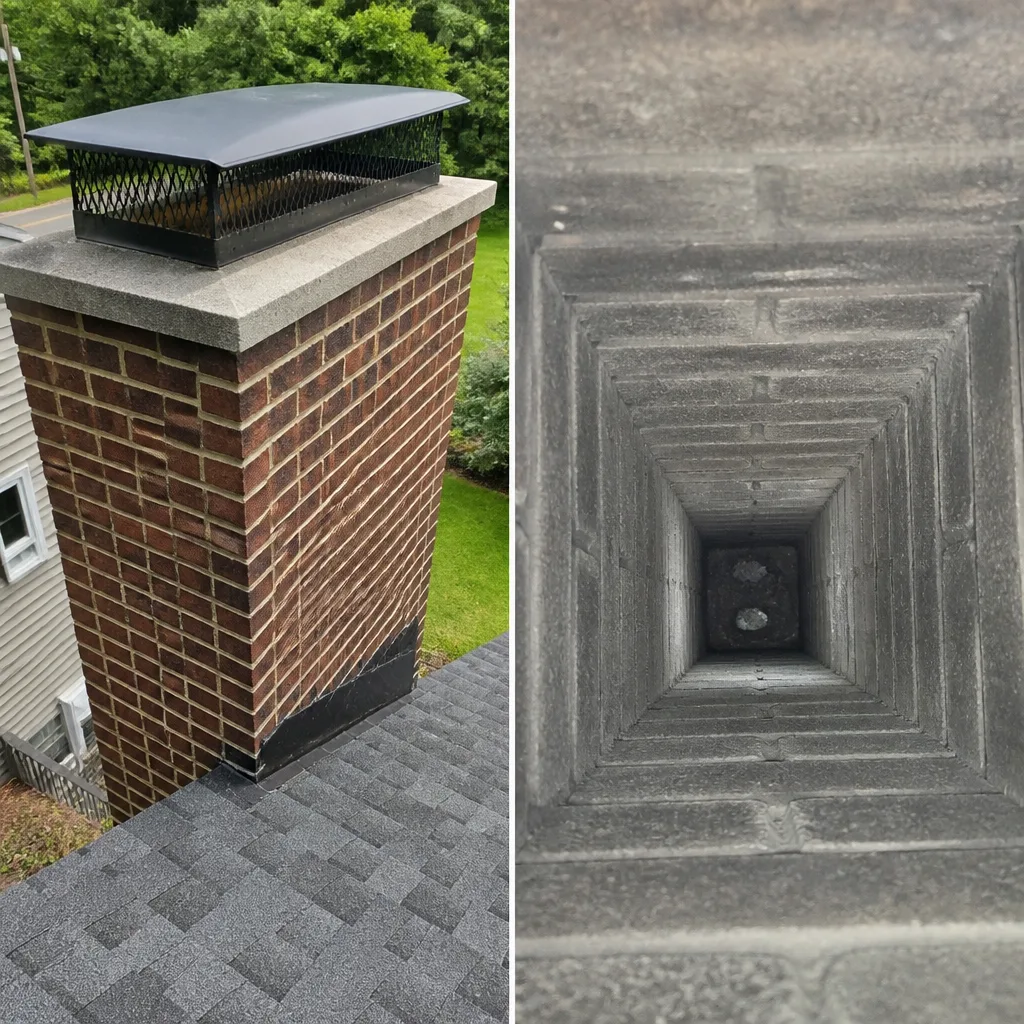
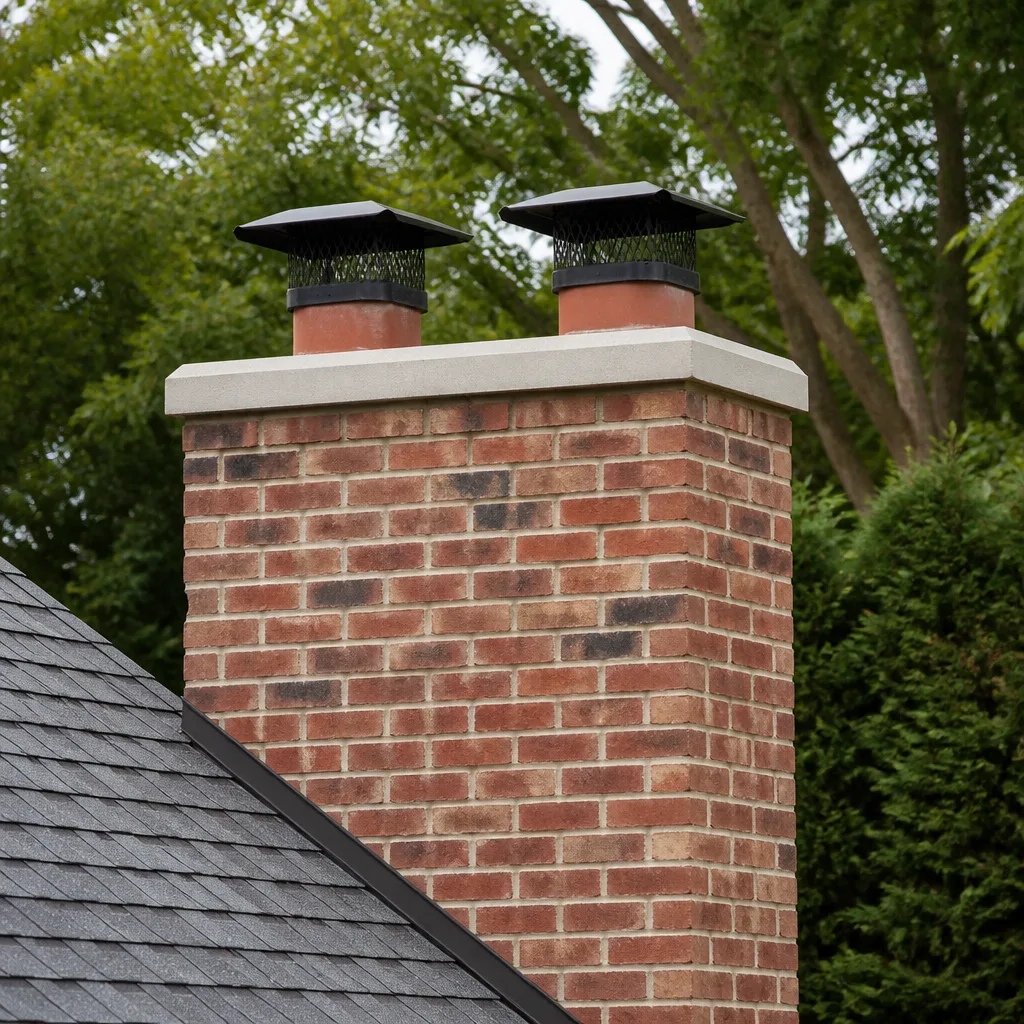
Flue relining
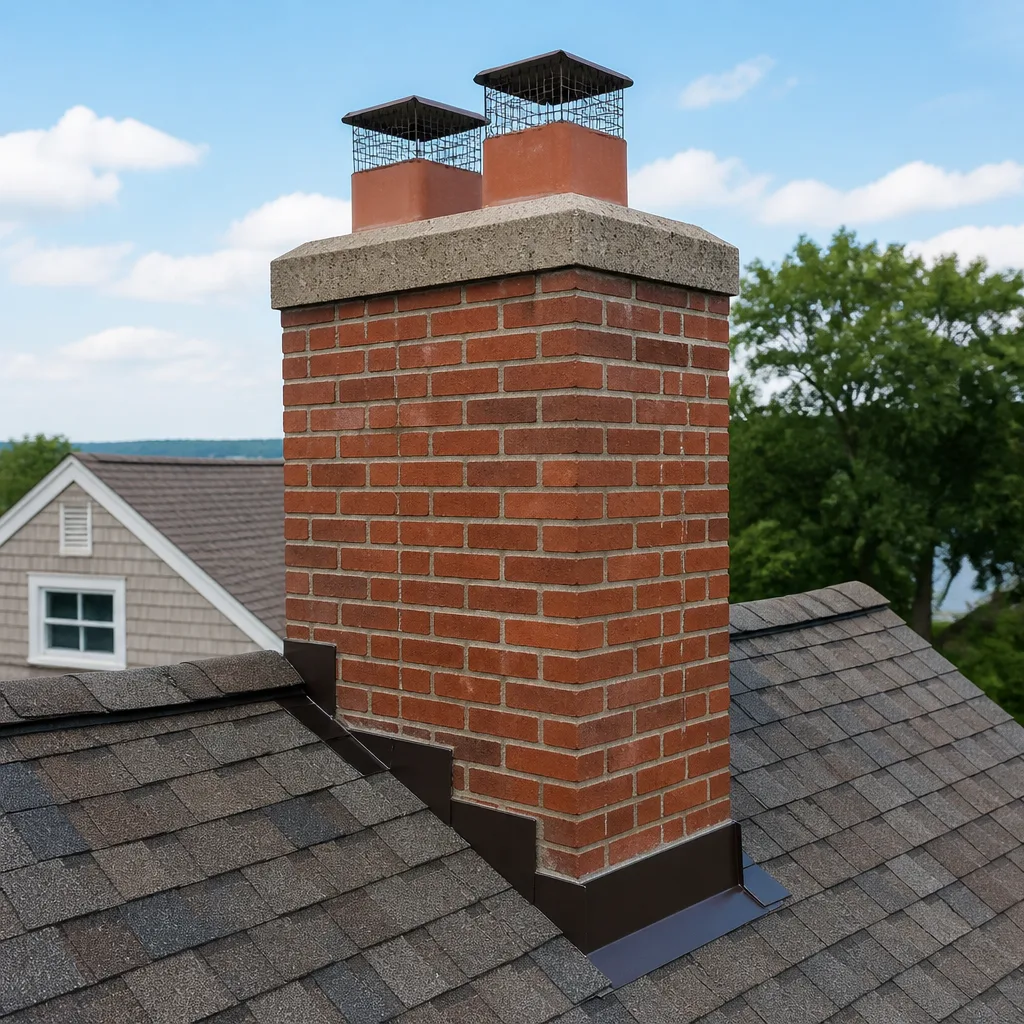
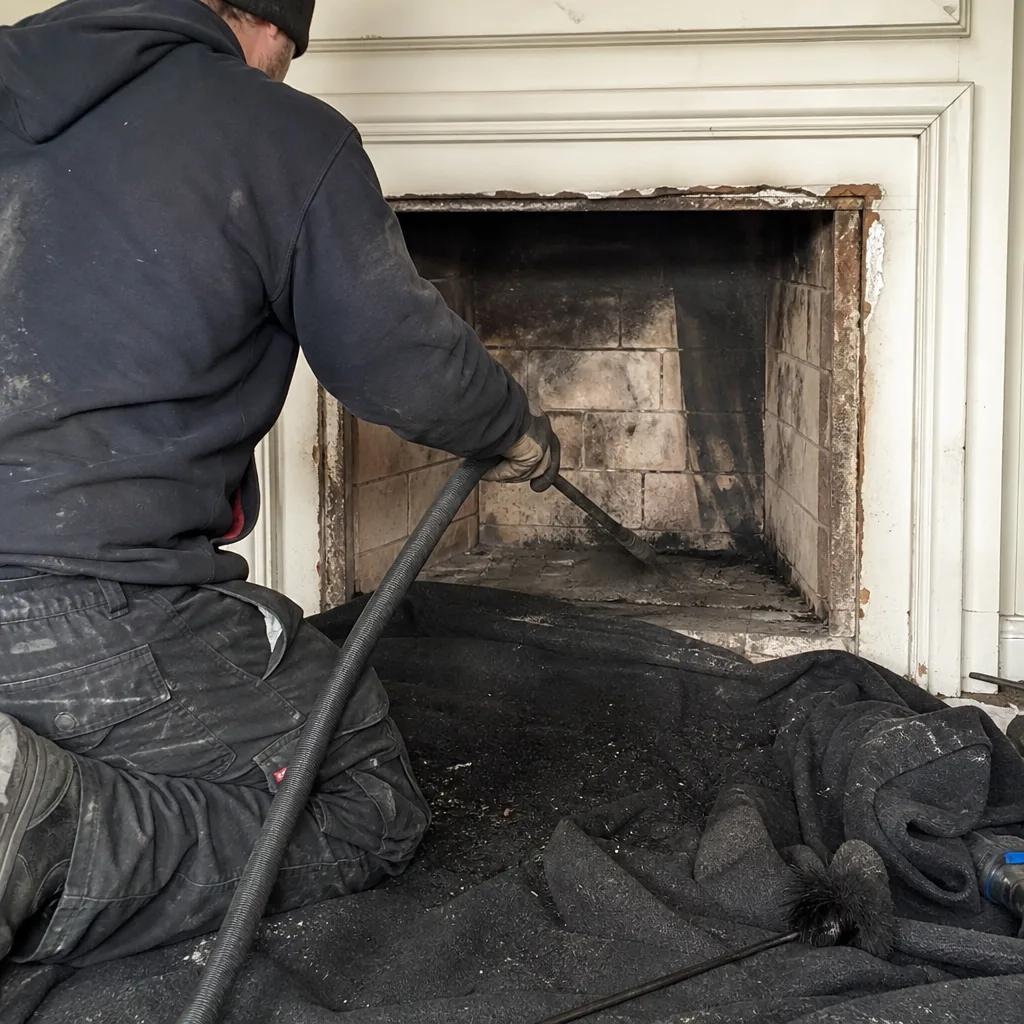 Before
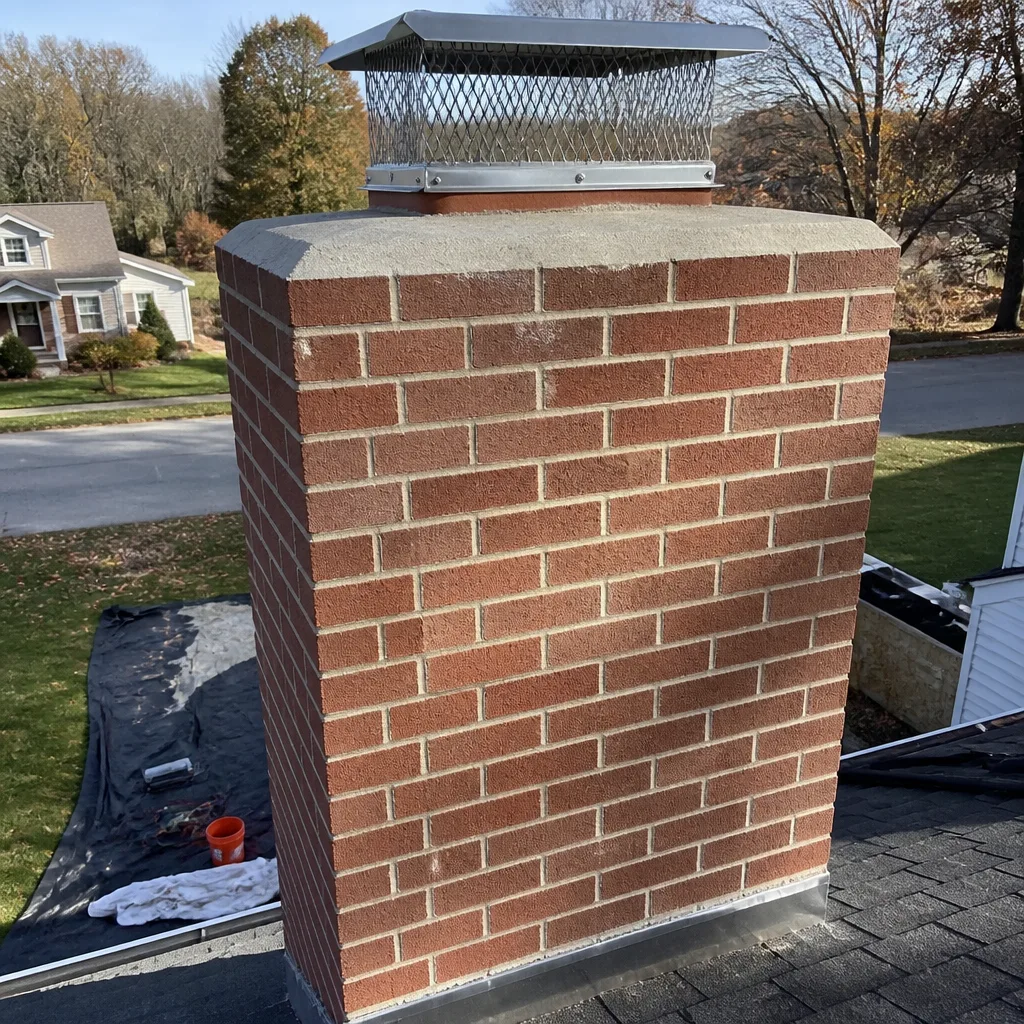 After
After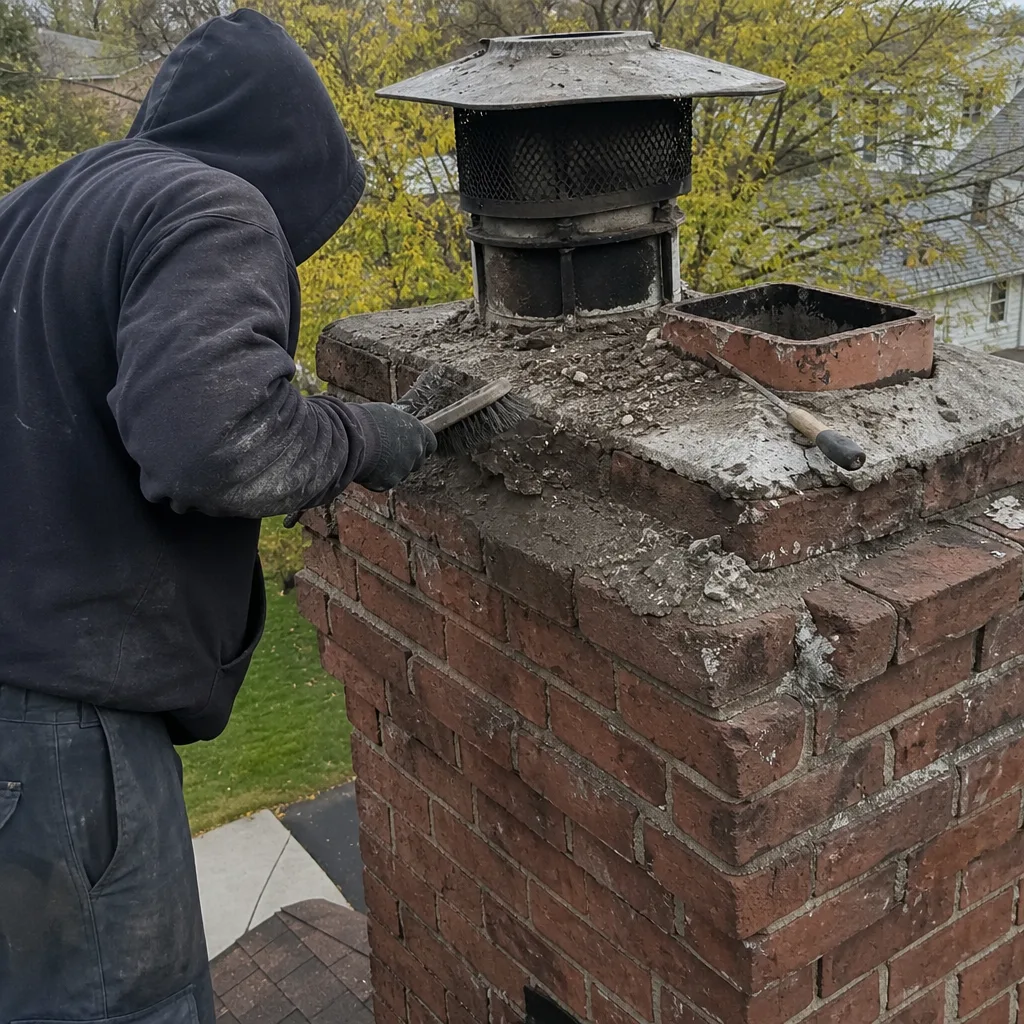 Before
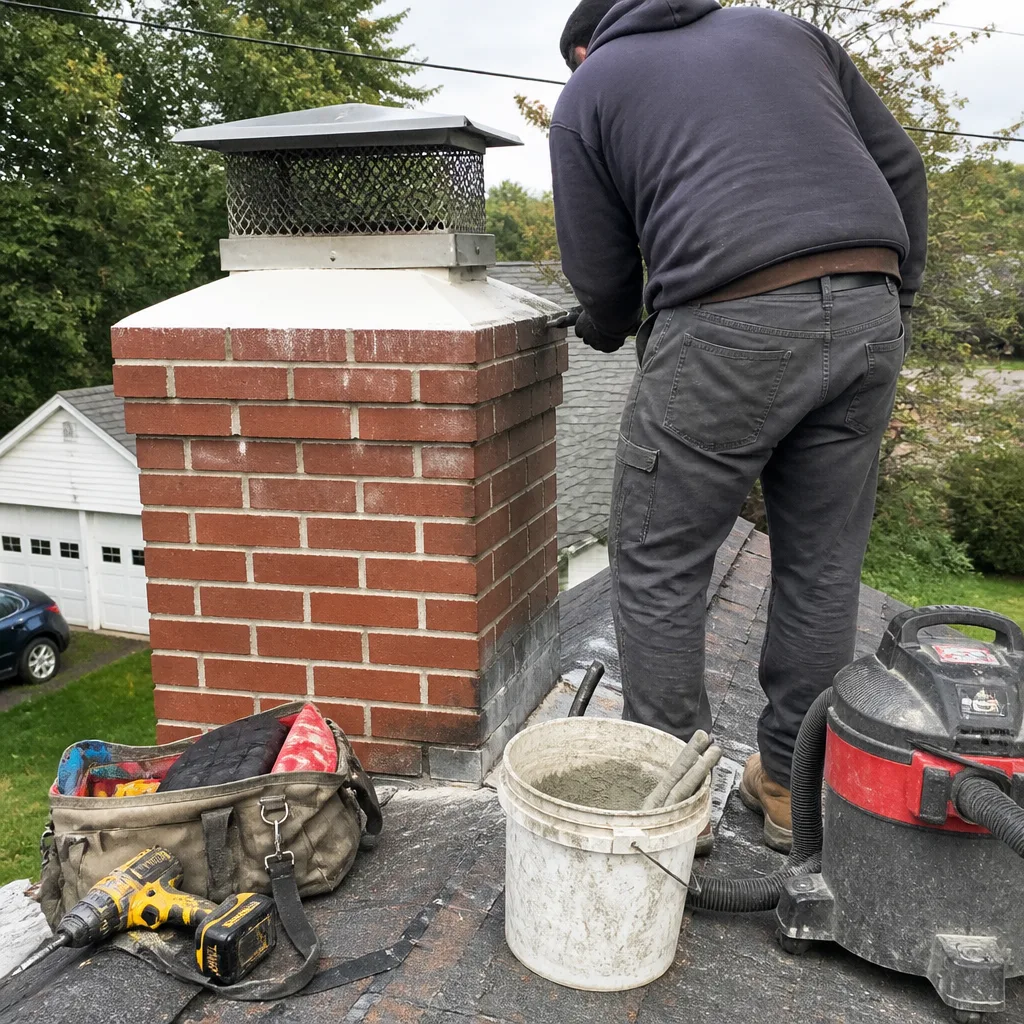 After
AfterChimney Cleaning & Sweep Maintenance Checklist for Pottstown Homeowners
There are eleven visible signs a chimney needs attention before you ever light a fire - most homeowners know one or two. Missing the other nine is how a routine cleaning appointment becomes an emergency lining job. In Pottstown, where freeze-thaw cycles from late October through April chew through mortar joints faster than in milder counties, a homeowner who knows what to look for can catch water damage before it reaches the flue. This guide - a companion to our Chimney Cleaning Warning Signs: A Pottstown Homeowner’s Reference Guide - separates what you can safely observe yourself from what requires a trained sweep on the roof, so you stop second-guessing and start asking the right questions.
Quick Answer
A thorough chimney maintenance checklist for Pottstown homeowners includes three layers: interior room-by-room checks you can do safely, exterior ground-to-cap inspections that reveal water and structural issues, and professional Level-2 camera inspections that document flue condition with photos. Most Pottstown homes built before 1990 need annual Chimney Cleaning & Sweep if wood-burning, biennial if gas, with exterior checks every spring after the last freeze.
Table of Contents
- Interior Room-by-Room Checklist: What You Can Safely Inspect
- Exterior Ground-to-Cap Checklist: Masonry, Flashing, and Water Signs
- Pottstown’s Freeze-Thaw Cycle: What It Does to Your Chimney
- Seasonal Timing: When to Schedule What in Montgomery County
- Three Checks Before Every First Fire of the Season
- Documenting Your Chimney History for Sales and Insurance
- What a Level-2 Camera Inspection Reveals That You Cannot See
- Common Mistakes to Avoid
- When to Call a Professional
- Frequently Asked Questions
- The Bottom Line
Interior Room-by-Room Checklist: What You Can Safely Inspect
We start inside because that is where you live, and that is where danger announces itself first. Carbon monoxide does not smell. Neither does a cracked flue liner leaking combustion gases into a bedroom wall. The checks below require no ladder, no flashlight more powerful than the one on your phone, and no tool beyond a screwdriver you probably already own.
The Firebox and Hearth
Open the damper fully and shine your light up the firebox. Look for these six conditions:
- Cracked or missing firebrick. Hairline cracks are normal; gaps wider than a nickel, or bricks that shift when you press them, are not. Heat escapes through gaps and attacks the surrounding structure.
- White or gray powder on brick surfaces. This is efflorescence, mineral salts left by moisture. It means water is getting in somewhere above and traveling down.
- Rust on the damper frame or fire grate. Rust means moisture. In a properly sealed flue, the damper should be dry even in humid July.
- Debris or animal nesting material. Twigs, leaves, or fur mean a cap is missing or damaged. Squirrels in Pottstown’s oak-heavy neighborhoods treat uncapped flues like apartment listings.
- Smoke stains above the firebox opening. This indicates drafting problems - oversized flue, blocked chimney, or negative pressure from a kitchen exhaust fan.
- Gaps between the hearth and the floor. A settling hearth pulls away from the firebox and creates a path for embers.
We see firebox damage most often in Pottstown’s West End homes built between 1890 and 1940, where original firebrick has endured a century of thermal cycling. Replacement firebrick from fireplace services in Pottstown matches the original dimensions but uses modern refractory material rated to higher temperatures.
The Surrounding Walls and Ceiling
Stand back and look at the wall surrounding the chimney breast. Water stains, peeling wallpaper, or paint bubbling in a straight vertical line track the chimney’s location inside the wall. In our experience across Montgomery County, these stains appear two to four weeks after a driving rain, not immediately - homeowners often blame a roof leak when the real culprit is failed flashing or a cracked crown.
Check the ceiling directly above the firebox, even if it means moving a sofa. A brown ring or fresh plaster patch suggests previous water intrusion that may have been painted over without repairing the source.
Basement or Crawl Space
If your chimney has a cleanout door in the basement, open it. There should be a thin layer of ash dust, not a mound of creosote, not water, and certainly not a smell of damp decay. A cleanout that fills with water after heavy rain tells you the chimney base is not sealed, and that water is accelerating deterioration of the foundation brick from the inside out. In Pottstown’s clay-heavy soils, this condition also invites efflorescence on basement walls as water seeks a path out.
Exterior Ground-to-Cap Checklist: Masonry, Flashing, and Water Signs
The exterior inspection requires binoculars and a willingness to walk the property line. Do not climb the roof. That is where the statistics turn against homeowners, and there is no shame in staying on the ground.
From the Ground: The First Pass
Walk to the street and look back at your chimney. Is it plumb, or does it lean? A chimney that tilts more than one inch per foot of height needs structural evaluation immediately. In Pottstown, we see leaning most often on homes where the chimney was built without proper footing depth, or where decades of freeze-thaw have undermined the base.
Now scan upward systematically:
- Spalling brick faces. The brick surface flakes off like old paint, exposing the softer inner body. This is freeze-thaw damage in progress. Pottstown’s winter temperature swings - 40 degrees in a single day are common - force water trapped in brick to expand and contract until the face pops off.
- Missing or crumbling mortar joints. Joint depth should be flush with the brick. Recessed joints create water traps. We call this “parking lot” mortar because it looks like the painted lines on asphalt.
- Vegetation growth. Ivy, moss, or small saplings in mortar joints mean constant moisture and root pressure. They also hide deterioration from view.
- Staining below the chimney shoulder. Dark streaks on siding or brick below the chimney indicate water running down the exterior, usually from failed flashing or a cracked crown.
Flashing and Roof Interface
Flashing is the metal that bridges the gap between chimney and roof. From the ground with binoculars, look for:
- Gaps where flashing pulls away from the chimney
- Rust holes or green corrosion on copper flashing
- Caulk or roofing cement smeared over problems as a “repair”
- Shingle debris accumulated at the chimney base, suggesting water is not shedding properly
Proper flashing has two layers: step flashing woven into the shingles, and counterflashing embedded into the mortar joints. Caulk is not a substitute. In Pottstown’s wind-driven rain climate, we see more flashing failures on west-facing chimney exposures, where afternoon storms hit directly.
The Crown and Cap
The crown is the concrete slab that tops the chimney, sloped to shed water. The cap is the metal cover above the flue opening. Both fail predictably:
A crown with hairline cracks is normal after ten years. A crown with chunks missing, or one that is flat or bowl-shaped, is funneling water into the chimney structure. The crown should overhang the brick by at least two inches, with a drip edge underneath.
The cap should cover the flue opening with mesh sides to block animals while allowing smoke escape. Missing mesh, rusted-through metal, or a cap that sits crooked means it is not doing its job. We install caps from Olympia Chimney and Famco because their stainless steel construction outlasts the galvanized versions sold at hardware stores by a factor of three in Pottstown’s climate.
Pottstown’s Freeze-Thaw Cycle: What It Does to Your Chimney
Montgomery County sits in USDA Hardiness Zone 6b, which means winter lows regularly reach zero degrees and spring thaws can follow within 48 hours. Brick is porous. It absorbs water like a sponge. When that water freezes, it expands by nine percent. When it thaws, it contracts. Repeat this cycle fifty times per winter, and the bond between brick and mortar weakens.
The damage pattern is specific to our region. South- and west-facing chimney exposures warm fastest on sunny winter days, melting snow that has accumulated in mortar joints. When the sun sets and temperature drops, that water refreezes from the outside in, creating pressure inside the joint that spalls brick faces and turns mortar to powder. North-facing exposures stay frozen longer but suffer from slower drying, so water remains available for the next freeze cycle.
We see the worst freeze-thaw damage in Pottstown neighborhoods with mature tree canopy - North End, the area around Manatawny Park, and sections of West Pottsgrove - where shade keeps chimneys damp longer after rain. Homes in these areas need more frequent exterior inspections, not because the construction is worse, but because the microclimate is harder on masonry.
The solution is not better brick. The solution is keeping water out. That means intact crowns, properly embedded counterflashing, and breathable water repellents applied to clean, dry masonry. We use Copperfield water repellent formulations because they allow vapor to escape while blocking liquid water entry. Paint or standard sealers trap moisture inside and accelerate damage.
Seasonal Timing: When to Schedule What in Montgomery County
Most online checklists say “before winter.” That is not specific enough for Pottstown’s weather calendar, and it leads to the October rush when every sweep in Montgomery County is booked two weeks out. Here is the actual schedule we recommend based on forty-two years of watching this market; for deeper background, see The Complete Guide to Chimney Cleaning in Pottstown.
| Task | Ideal Window | Why This Timing |
|---|---|---|
| Annual sweeping (wood-burning) | March 15 - May 15 | After burning season, before spring rains saturate creosote; easier scheduling; technician can assess winter damage while it is fresh |
| Annual sweeping (gas) | April 1 - June 30 | Biennial schedule acceptable; spring timing avoids fall rush; allows repair scheduling before next season |
| Exterior masonry inspection | Mid-April, after last hard freeze | Winter damage is visible; mortar and crown repairs need 28 days minimum cure before first freeze |
| Water repellent application | May 1 - September 30 | Requires 48 hours of dry weather above 50°F; Pottstown’s September often delivers this reliably |
| Cap and flashing repair | August 1 - October 15 | Prevents autumn leaf accumulation and winter water entry; still allows cure time |
| Pre-season homeowner check | October 1 - October 15 | The three-check routine below; early enough to book repairs before first fire |
The October rush is real. In 2023, our call volume at Hearthstone Chimney Co. home tripled in the third week of October after the first cold snap. Homeowners who scheduled in April got their preferred appointment slot. Those who waited called us while carrying firewood.
Three Checks Before Every First Fire of the Season
Regardless of when your last professional cleaning occurred, perform these three checks before lighting the first fire. They take ten minutes and have prevented house fires we have responded to in Pottstown.
- Verify the damper opens fully and closes tightly. Open it, confirm you see daylight at the flue top (use your phone flashlight), then close it and confirm no light leaks through. A damper that sticks halfway open wastes heat; one that sticks closed fills the room with smoke.
- Confirm no obstruction at the flue top. From the ground with binoculars, or from an upstairs window, verify the cap is in place and no visible debris, nest material, or ice dam blocks the opening. After Pottstown’s windy March and April, we find dislodged caps and wind-driven leaf accumulation that homeowners missed.
- Test your smoke and carbon monoxide detectors. Press the test button. Replace any unit over ten years old, regardless of test results. We recommend hardwired detectors with battery backup on every floor, plus one within ten feet of the fireplace. This is not chimney maintenance strictly speaking, but it is the check that saves lives when something else has been missed.
If any of these three checks reveals a problem, do not light the fire. Call for an inspection. The cost of a delayed evening is trivial against the cost of a chimney fire or CO poisoning.
Documenting Your Chimney History for Sales and Insurance
Homeowners who have lived in their house for twenty or more years often have no record of what has been done to their chimney. This creates two problems. When you sell, the buyer’s inspector flags the chimney, and you have no documentation to counter a worst-case report. When you file an insurance claim after a fire, the adjuster asks for maintenance records, and you have nothing.
We recommend a simple log format, maintained in a file folder with your other home records:
- Date of each professional inspection or cleaning
- Company name and technician name
- Scope of work performed
- Photos provided (print them; digital files corrupt or migrate)
- Any recommendations made and whether they were completed
- Your own notes from the seasonal checks above
After a chimney cleaning and sweep in Pottstown, we provide a written report with dated photos and a plain-English verdict. Keep this. It is your evidence of due diligence. In forty-two years, we have seen this documentation expedite insurance claims and prevent sale-killing renegotiations.
For Pottstown’s older housing stock, this history is especially valuable. A buyer’s inspector who sees a 1920s chimney with no records assumes deferred maintenance. The same chimney with fifteen years of documented annual inspections and proactive repairs reads as well-maintained. The difference in buyer perception is thousands of dollars.
What a Level-2 Camera Inspection Reveals That You Cannot See
The checklist above covers what a homeowner can observe. But the most dangerous chimney conditions are invisible from any vantage point you can reach safely. That is the purpose of a Level-2 inspection, defined by the National Fire Protection Association as a visual examination by video scanning device.
Our technicians use camera systems to document the full length of the flue liner, from the smoke chamber to the cap. What we find in Pottstown homes falls into categories:
- Cracked clay flue tiles. Hairline cracks open under thermal stress and allow combustion gases into the chimney structure. In homes built before 1980, clay tile liners were standard and are now reaching end of life.
- Missing mortar between flue tiles. Gaps at tile joints create the same hazard as cracks, often worse because they are larger.
- Glazed creosote. The shiny, hardened form of creosote that standard brushing cannot remove. It ignites at lower temperatures and burns hotter than flaky creosote. We find this most often in Pottstown homes where homeowners burn unseasoned wood or restrict airflow to “make the fire last.”
- Spalled flue tile surfaces. The interior equivalent of exterior spalling, caused by condensation of acidic flue gases on cool surfaces.
- Obstructions and animal entry. Birds, squirrels, raccoons, and the occasional bat. The camera reveals nests, carcasses, and entry points that ground inspection misses.
The inspection ends with photos you can see and a plain-English verdict. We explain what requires immediate action, what can be scheduled, and what is normal wear. No jargon, no pressure. If the flue is sound, we say so. If a stainless steel liner from DuraFlex is the right solution, we explain why and show you the condition that justifies it.
This documentation also satisfies the requirement for a Level-2 inspection upon sale or transfer of property, which Pennsylvania law references through adoption of NFPA 211 standards.
Common Mistakes to Avoid
- Assuming gas fireplaces need no maintenance. Gas burns cleaner than wood, but corrosive condensation still degrades liners, and debris still blocks vents. We find bird nests in gas flues every spring in Pottstown.
- Using the fireplace odor as a “reminder” system. By the time you smell creosote or animal decay, the condition has been present for weeks. Odor is a lagging indicator, not an early warning.
- Applying waterproofing sealant from a hardware store. Standard sealants trap moisture inside brick. We remove these failed applications every year in Pottstown, usually after the homeowner has accelerated the damage they were trying to prevent.
- Ignoring the chimney because “we barely use it.” An unused chimney suffers water intrusion and animal entry without the drying effect of occasional fires. Some of the most deteriorated chimneys we inspect are in homes where the fireplace has not been lit in five years.
- Hiring based on the lowest quote without verifying scope. A “$99 sweep” that does not include a visual inspection of the flue, does not include photos, and does not produce a written report is not a bargain. It is a lottery ticket.
- Waiting for the first cold night to schedule. The October rush means delayed appointments, rushed technicians, and homeowners who light the first fire before the inspection happens because they are tired of being cold.
When to Call a Professional
Call a sweep when your ground-level inspection reveals spalling brick, missing mortar, staining, or any obstruction you cannot explain. Call immediately if you smell smoke in rooms away from the fireplace, if the damper malfunctions, or if your carbon monoxide detector alarms. Call before you need to call the fire department.
Hearthstone Chimney Co. offers free estimates in Pottstown. A technician will walk your checklist with you, verify your observations, and provide a camera inspection with photos you can see and a plain-English verdict. Call (610) 819-4281. A live person answers, 24 hours a day, every day.
Frequently Asked Questions
A standard chimney sweep and Level-1 inspection in the Pottstown area typically ranges from $175 to $295, depending on flue accessibility, creosote buildup severity, and whether the fireplace is wood-burning or gas. Level-2 camera inspections add $100 to $200 but include dated photos and a written report. Hearthstone’s $89 Seasonal Tune-Up covers basic cleaning and safety checks for qualifying systems. Call (610) 819-4281 for an exact quote - estimates are free.
Wood-burning fireplaces and inserts need annual sweeping if used regularly, per NFPA 211. Occasional users can extend to every two years if the previous inspection showed minimal creosote. Gas fireplaces need inspection every two years, though the flue still requires clearing. Pottstown’s oak and hickory firewood, common in local cordwood sales, burns hotter but produces more creosote than softwoods if unseasoned. Call (610) 819-4281 to schedule - a live person answers every call.
You need a new liner when the existing one is cracked, missing mortar between tiles, or made of unlined brick that does not meet modern safety standards. We do not recommend liner replacement without camera evidence you can see for yourself. In Pottstown homes built before 1940, unlined brick chimneys are common and fail NFPA 211 requirements for wood-burning appliances. A stainless steel liner from DuraFlex, properly sized and insulated, often costs less than rebuilding the chimney and carries a lifetime warranty. Call (610) 819-4281 for a camera inspection and honest assessment.
Skipped maintenance leads to three predictable outcomes: chimney fire from ignited creosote, carbon monoxide intrusion from cracked flues or blocked vents, and structural damage from water infiltration that compounds until rebuild is the only option. In Pottstown, we respond to an average of one chimney fire per winter that began with creosote ignition in a flue last cleaned five or more years ago. The cost of prevention is a fraction of the cost of remediation. Call (610) 819-4281 to book before burning season.
Homeowners can perform the ground-level and interior checks in this guide safely. We do not recommend DIY flue cleaning. The tools are specialized, the creosote assessment requires training, and the roof work is genuinely dangerous. More critically, a homeowner cannot inspect the full flue length without a camera system and cannot certify compliance with NFPA 211 for insurance or sale purposes. The $175 to $295 for professional service includes documentation that protects your investment. Call (610) 819-4281 for a free estimate.
A chimney fire sounds like a freight train or low-flying aircraft, produces dense smoke from the chimney top, and may shake the house. Some are slow and silent, detected only by cracked flue tiles or discredited metal components afterward. If you suspect a chimney fire, evacuate, call 911, and do not use the fireplace until a Level-2 inspection confirms flue integrity. In Pottstown’s older housing stock, where chimneys may already have hidden damage, any suspected fire requires professional evaluation before the next use. Call (610) 819-4281 for emergency inspection scheduling.
The Bottom Line
A chimney checklist worth following separates what you can observe from what requires trained eyes and proper equipment. Inspect your firebox, walls, and basement seasonally. Walk your property line with binoculars every spring. Perform the three pre-fire checks without fail. Document everything. Schedule professional cleaning based on fuel type and use pattern, not on odor or calendar anxiety. And when you need a camera inspection with photos you can see and a plain-English verdict, call a company that has been in Pottstown long enough to know which neighborhoods have clay soil, which face the worst weather exposure, and which chimneys were built before the standards existed. For more guides & resources, explore our blog.
Done right - and we stand behind it.
Written by Russell Haines, Owner at Hearthstone Chimney Co., serving Pottstown since 2014.